The Pulse of Tbourida: Morocco’s Equestrian Spectacle
Introduction
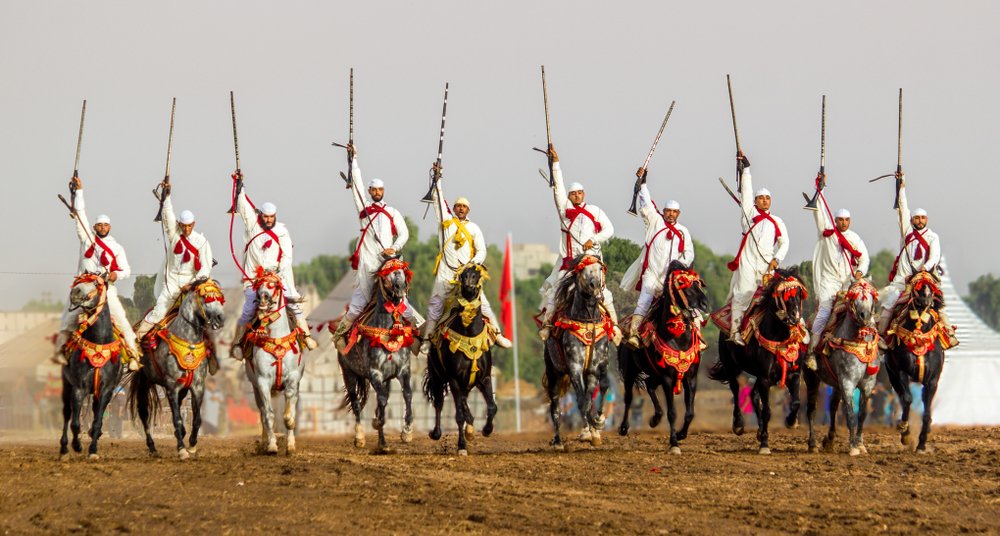
Imagine a line of horses — sleek, strong, their flanks tight with muscle — kicking up red dust under a blazing Moroccan sun. Each mount flows in unison, nostrils flaring, hooves drumming, while atop sits a rider in flowing robe, musket ready.
At the edge of a flat plain, their leader utters a command. The horses surge forward. Then, as one, the riders raise their muskets and fire — not a cacophony, but a single, thunderous crack. That moment is the pulse of Fantasia (or Tbourida), Morocco’s fiercely romantic ritual of horses, heritage, and fleeting spectacle.
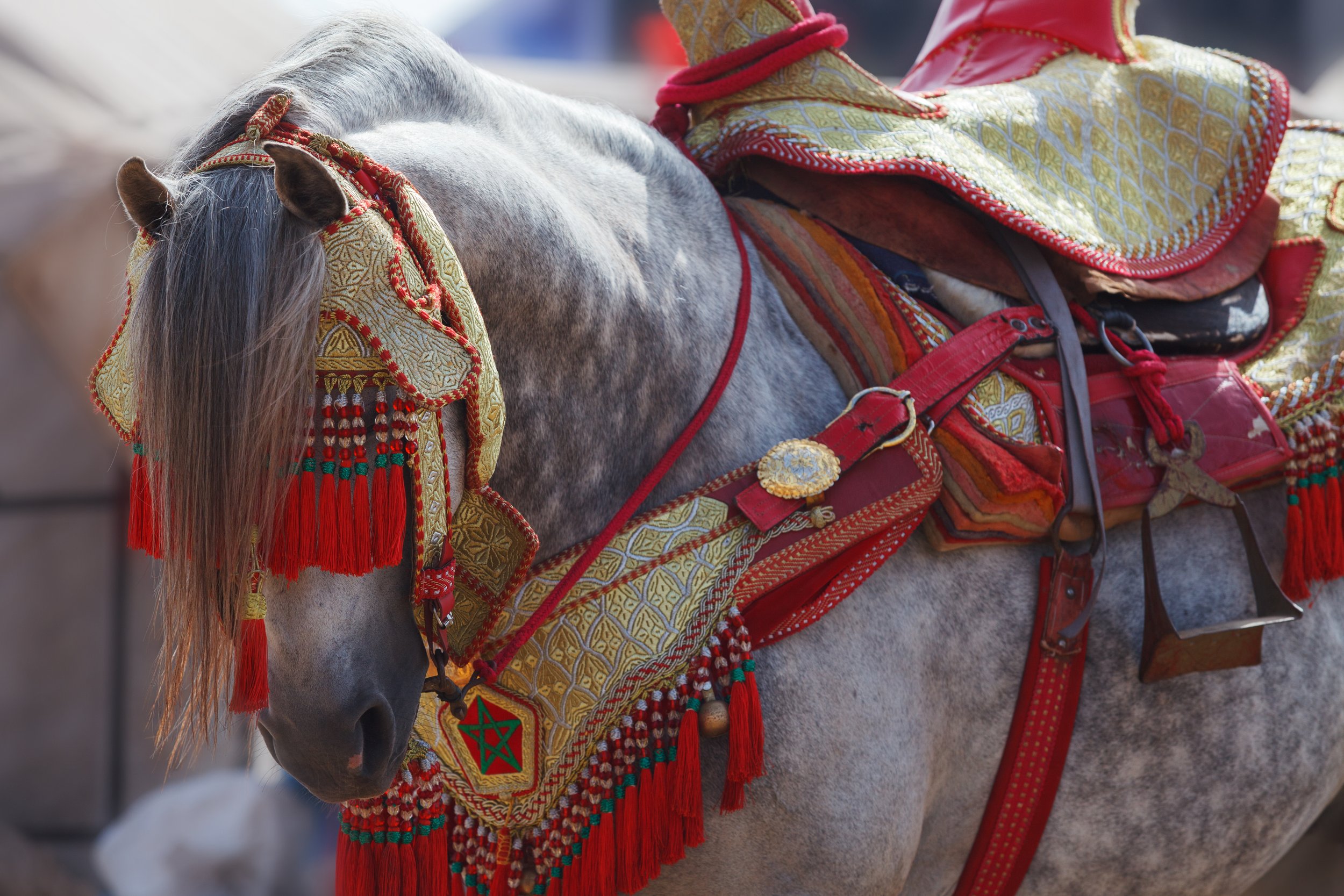
A horse decorated for Tbourida
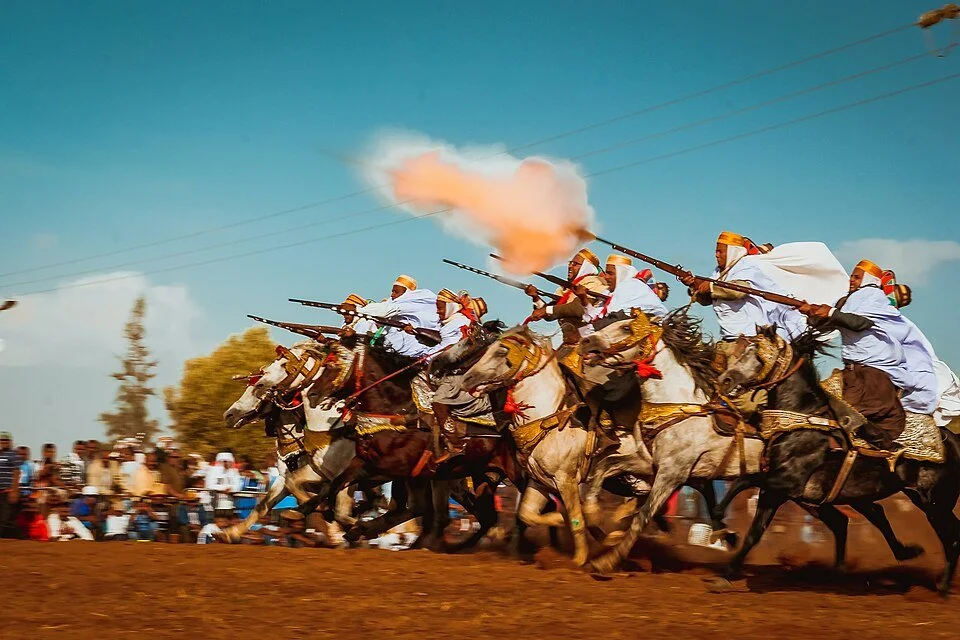
Fantasia at Aïn El Arbaa
What is Tbourida?
Tbourida, also known as Fantasia, is a traditional Moroccan equestrian performance that reenacts historical cavalry charges. It is a choreographed display involving a team of riders galloping in unison and firing their muskets simultaneously at the end of the charge.
The performance is both athletic and ceremonial, blending horsemanship, precision, and pageantry. It serves as a living symbol of Morocco's equestrian and tribal heritage, often used to celebrate local pride, honour ancestors, and mark festive occasions.
When and Where
Performed by male and increasingly female riders known as "mejouads," Fantasia is most often showcased during moussems (saint-day festivals), national holidays, and agricultural celebrations across Morocco. Prominent gatherings take place in Meknes, El Jadida, and Fes, particularly during the autumn harvest season.
For travellers, the Tbourida shows at the Salon du Cheval in El Jadida each October or the Fête du Trône celebrations near Rabat and Meknes offer some of the most stunning and accessible displays.
Origins and Evolution
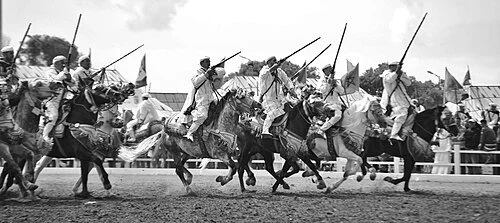
From its roots as a war-time cavalry drill to a modern cultural performance, Tbourida traces a long arc of Moroccan identity. Centuries ago, Berber and Arab horsemen relied on speed and synchronicity to defend territory and assert power. The charge followed by a unified musket shot was a declaration of unity and martial discipline. By the 17th century, as tribal warfare waned, the tradition remained — repurposed for ceremony and local pride, especially in regions like the Middle Atlas, Chaouia, and Souss Valley.
Today, Tbourida connects past and present. In rural towns and cities, entire communities gather to watch or compete. Riders mount Barb or Arab-Barb horses, adorned in ornate tack; the riders wear traditional robes and turbans. Teams of ten to fifteen line up, wait for the signal, then charge down a 200-metre track. Success relies on perfect timing — horses must stay in formation, and the musket fire must come as one. Judges score for precision, synchronicity, and presentation.
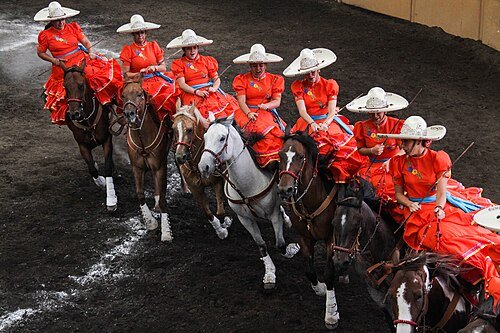
Tbourida continues to evolve. Once a male-only tradition, it now includes female troops performing to equal standards. The shift reflects wider cultural changes and a desire to preserve equestrian heritage while making it more inclusive..
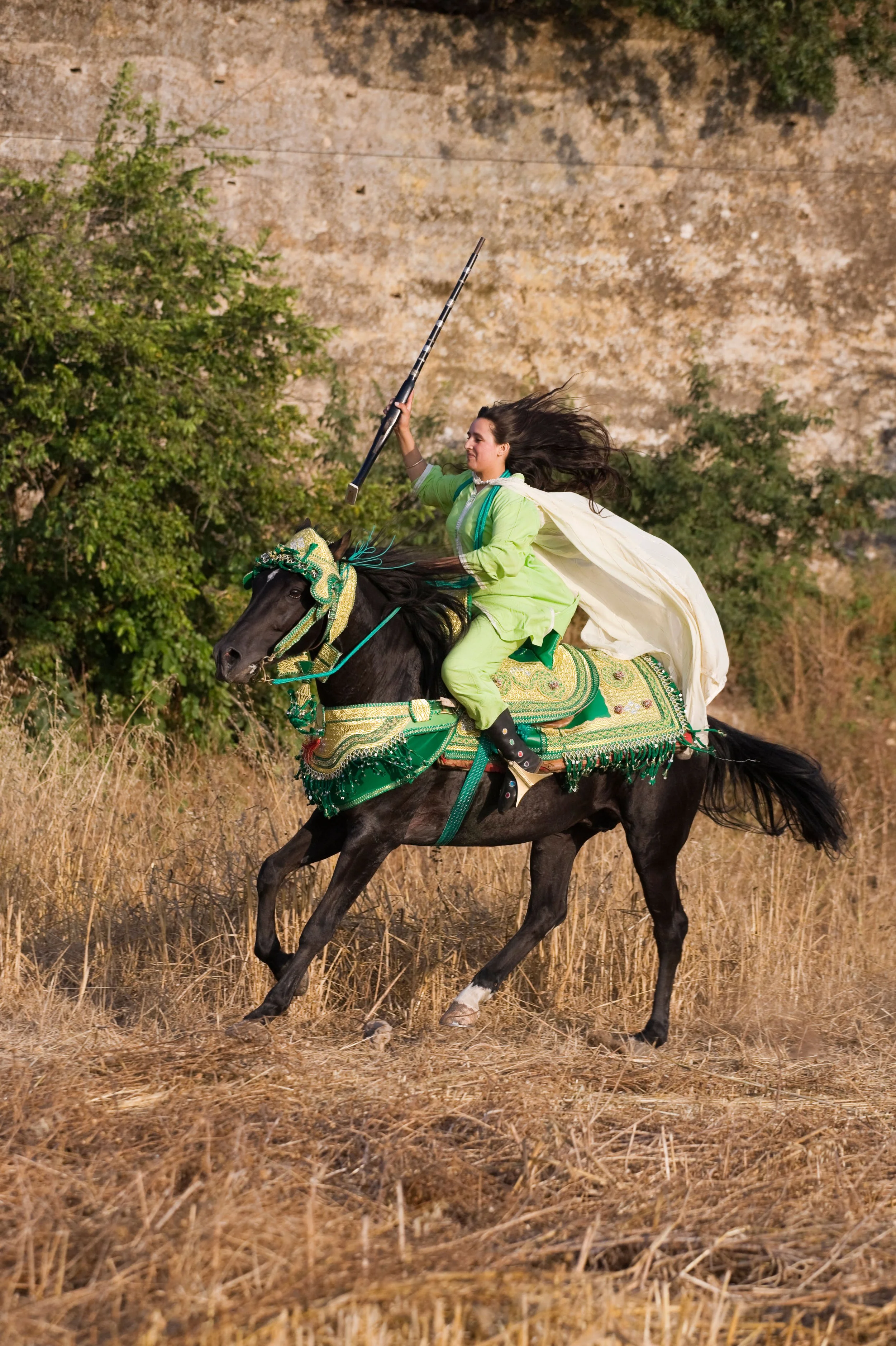
Once a male-only tradition, it now includes female troops performing to equal standards.
The Horses
As the smoke drifts and the dust settles, what stands out are the horses themselves — primarily the Barb and Arab-Barb breeds. These horses are native to North Africa and have been bred for centuries for their endurance, agility, and composure under pressure.
The Barb is known for its dense bone structure, short back, and strong hindquarters, making it particularly suited to the sudden acceleration and stops required in Fantasia. The Arab-Barb cross combines the Barb's resilience with the Arabian’s refinement and sensitivity.
Horses used in Tbourida undergo rigorous training to build tolerance to noise, maintain straight-line gallops in formation, and respond precisely to minimal rein or leg cues. Their temperament is key: they must be bold yet steady, capable of both speed and control under the intense conditions of performance..
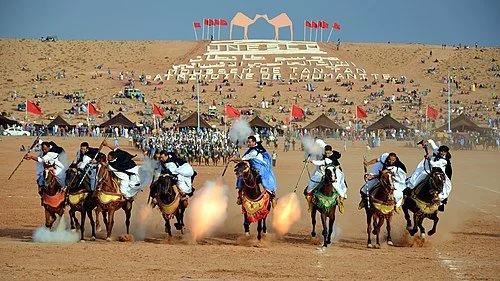
Fantasia Arabe by Eugène Delacroix, 1833
Conclusion
Tbourida is a reminder that tradition, when held with reverence and lived with spirit, can still stir the heart. That link between horse and survival, not just sport or spectacle, is what gives Tbourida its gravity.
It’s not just a performance; it’s a ritual echo of when horsemanship meant the difference between life and death, belonging or conquest. Beneath the gunpowder smoke and gleaming tack is something elemental — the universal thrill of a gallop, the trust between rider and horse, and the instinct to ride not for glory, but for home. It's a pulse — one that still beats, bold and unbroken, across Morocco’s timeless plains.
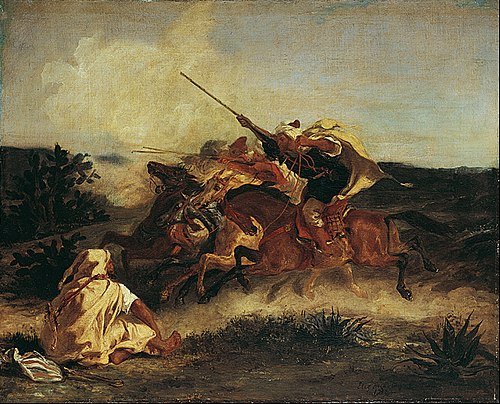
Fantasia in Morocco
Related articles