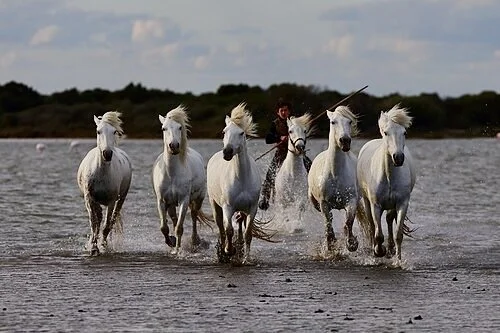
The White Horses of the Camargue
Introduction
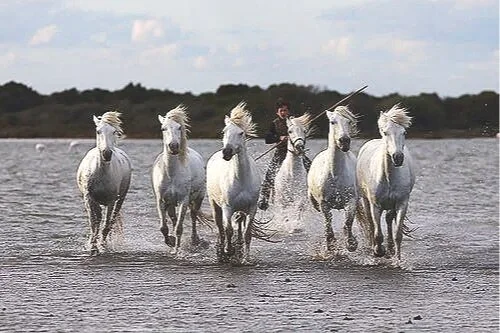
The Camargue horse is one of the oldest and most resilient breeds in Europe. Developed over centuries in the Rhône Delta of southern France, these compact, white-grey horses are adapted to a demanding landscape of saltwater marsh, mistral winds, and seasonal extremes. They are emblematic of the Camargue region — not just in image, but in the way they embody the place’s mix of endurance, adaptability, and autonomy.
Although often described as wild, Camargue horses are more accurately classified as semi-feral. They live year-round in open wetlands, moving through shallow lagoons and reed beds in herds. However, they are managed by local herders known as Gardians — southern France’s version of the cowboy — who train and ride them for livestock work, especially managing the region’s distinctive black bulls.
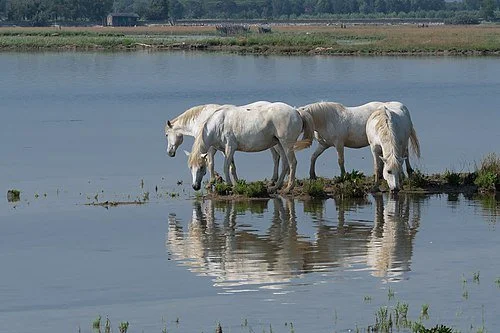
Horse’s is the Camargue
Each year, herds are rounded up for routine health inspections, branding, and the gelding of colts that are not suitable for breeding. This annual management maintains herd health and supports genetic integrity, ensuring the breed remains robust and fit for work.
Gardians work on horseback, using traditional tack tailored to the environment: high-pommelled Camargue saddles, wide metal stirrups for stability in waterlogged terrain, and long tridents for guiding bulls. Horses are trained to be responsive, calm under pressure, and capable of sudden bursts of movement — essential traits for manoeuvring livestock across open marsh.
The breed’s physical features reflect its environment. Camargue horses are small but powerful, with strong legs, deep chests, and hard hooves that resist rot in wet conditions. Their iconic white coats develop with age — foals are born dark, gradually lightening over the first few years. The horses’ size, typically 135–150 cm at the wither, makes them agile and easy to mount and dismount during herding work.
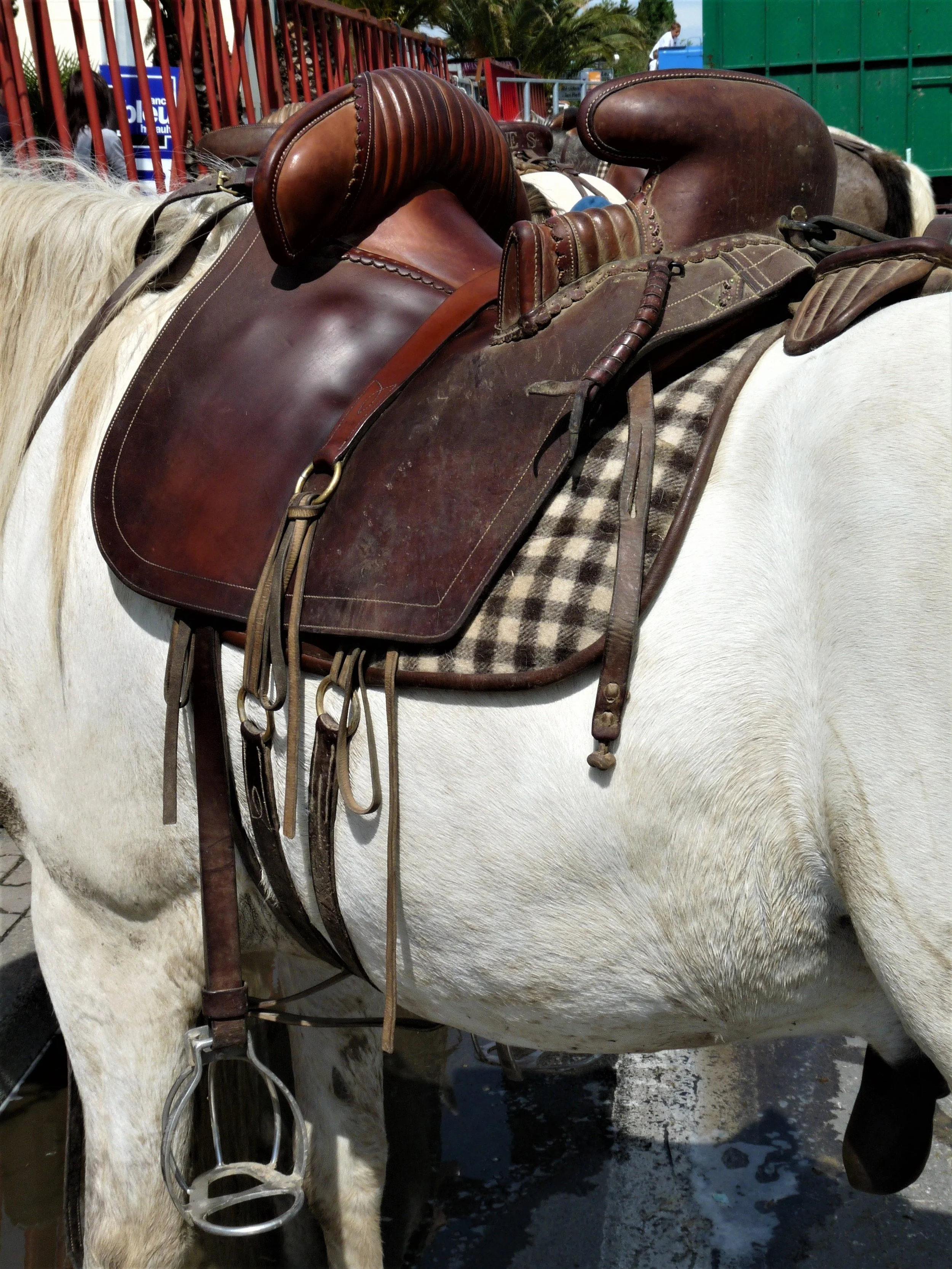
A Camargue saddle
Breeding takes place in "manades" — semi-feral farms where horses (often alongside bulls) graze freely across open wetlands. To qualify for official recognition, foals must be born in the Camargue, raised outdoors, and observed suckling from a registered mare. Only horses raised within the historic cradle of the breed are eligible for studbook registration, ensuring the deep connection between land, lineage, and function remains intact.
Beyond agriculture, Camargue horses play a role in ecological management. Grazing by semi-feral herds helps regulate vegetation and maintain biodiversity in the fragile wetland ecosystem, which supports hundreds of bird species including flamingos, egrets, and herons. Their movement patterns naturally prevent overgrowth and support habitat diversity..
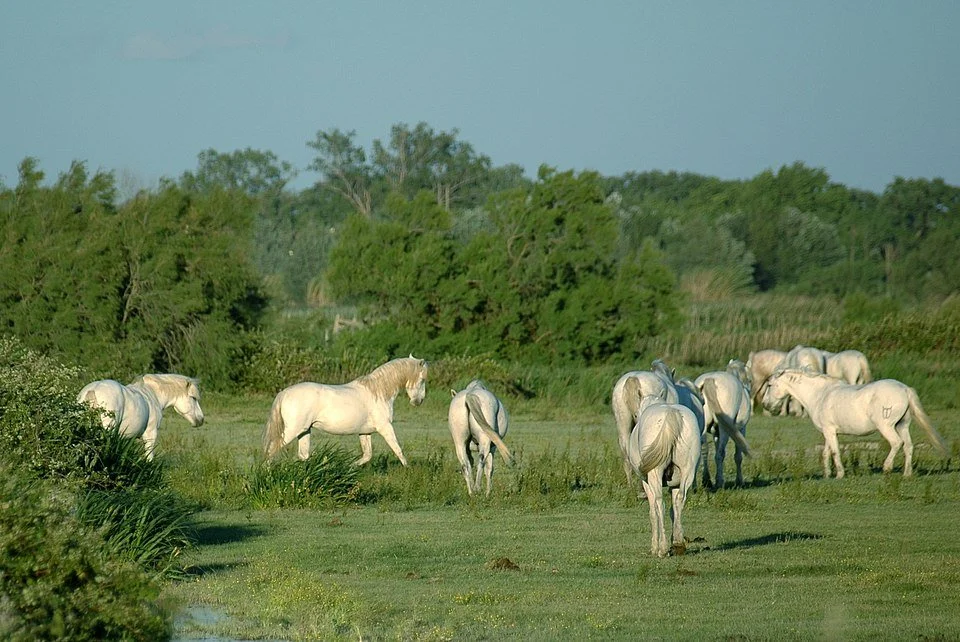
Horses in the “manades”
.In modern times, the Camargue horse has also become part of the region’s tourism economy. Visitors can observe or ride the horses through guided tours and ranch stays, often led by multi-generational families who maintain traditional practices. While some operations lean heavily into performance or spectacle, many still prioritise authenticity, animal welfare, and environmental stewardship.
The best way to witness the Camargue horse in its cultural context is through the region’s rich festival calendar. Several key events throughout the year offer immersive access:
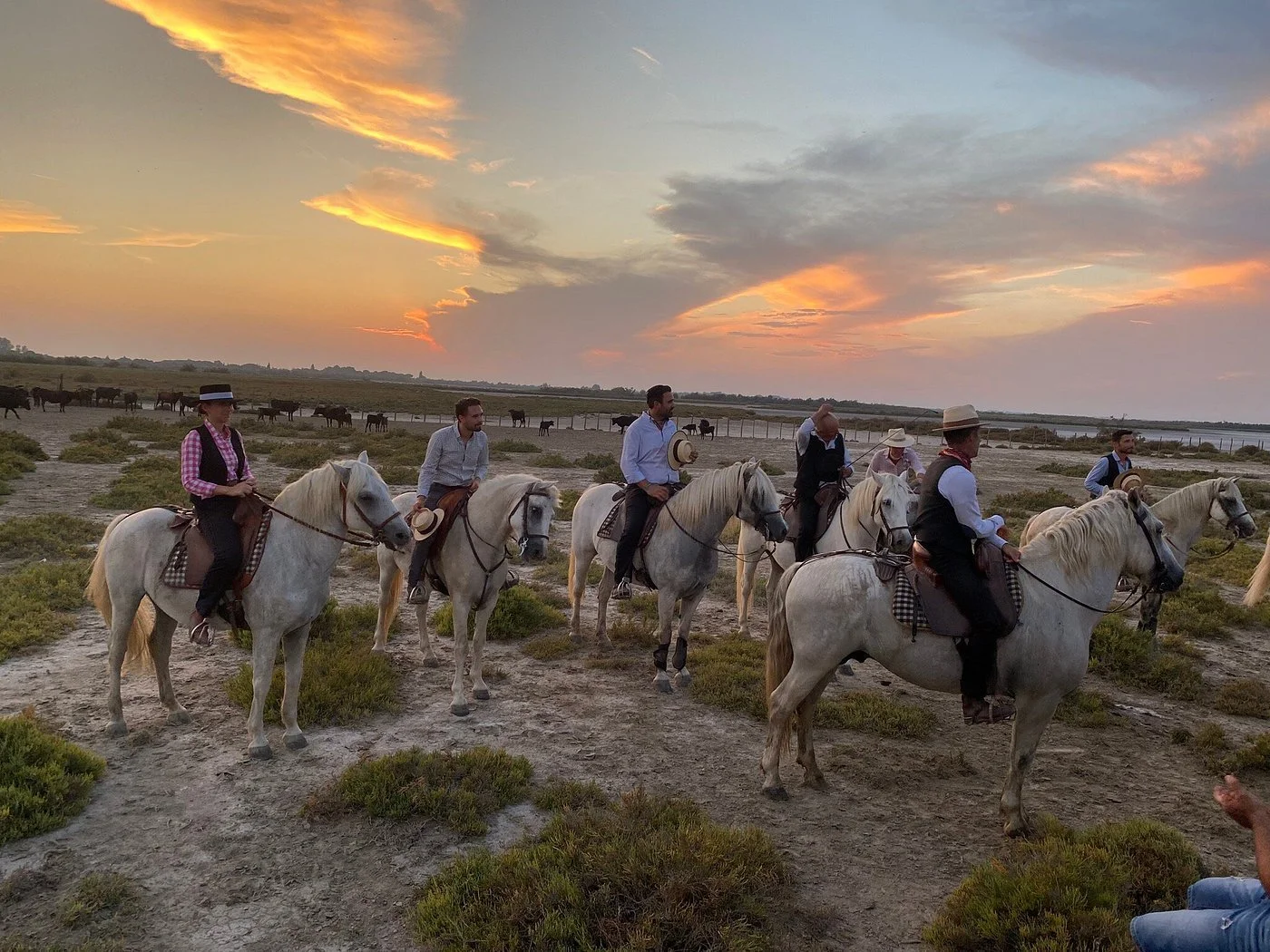
Riding tourism in the Camargue
Camargue Horse Fair (February): Hosted near Mas de la Cure, this annual fair brings together breeders, buyers, and the public for demonstrations of working horsemanship, cattle handling, and riding exhibitions. It offers insight into the breed’s practical value and traditional use.
Feria du Cheval (July): A summer celebration of equestrian arts, regional music, and heritage. Riders, musicians, and dancers fill Saintes-Maries-de-la-Mer in a multi-day celebration that honours the Gardian lifestyle and the horses central to it.
Festival d’Abrivado (11 November): One of the most dramatic public showcases of Camargue horsemanship. Hundreds of Gardians escort bulls through the town or along the beach, demonstrating control, coordination, and community.
Fête Votive (June): A local summer celebration marked by horse parades, bull runs, and traditional games. Less commercial and more rooted in local rhythms, it’s a way to observe how horses and people live alongside one another daily..
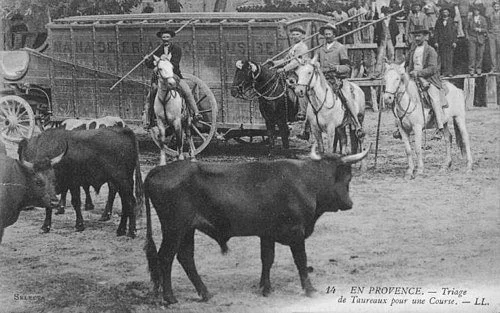
Gardians in parade
Since 1978, the Camargue horse has been officially recognised and protected by French agricultural authorities. With strict standards for registration and breeding, these efforts ensure the breed's continued contribution to both heritage and ecology.
The value of the Camargue horse lies in its integration — into culture, landscape, and livelihood. These are not ornamental animals. They are working horses that continue to serve a purpose in contemporary rural life, even as the region evolves.
For those who encounter them — whether riding through a shallow étang or watching a herd cut across the horizon — the Camargue horse offers a clear, grounded image of resilience: a breed shaped by the land, still working in step with it.
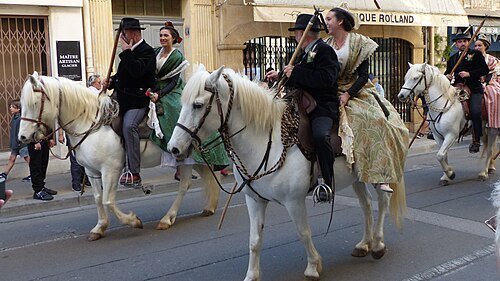
Gardians selecting bulls from a manade for use in the course camarguaise, Camargue, France, early twentieth century
Related articles